 cfe12c5a5d
* Update Cypress element selectors

* Add seed data function to Cypress

* Change Cypress setup to be part of db-seed

* Add DatabaseSource selector to Create Data Source spec

* Add getElement command to Cypress

* Fix eslint issues

* Change Cypress getElement to getByTestId

* Add Percy and test it with the CI

* Change Percy dependency for CI to Cypress' Dockerfile

* Change Percy's execution to the docker container
- add --no-save to avoid errors on Dockerfile.cypress
 - pass PERCY_TOKEN from the CI to docker container

* Fix missed char on CircleCI config file

* Move Percy execution back to host on the CI

* Test adding PERCY_TOKEN to frontend-e2e-tests on CI config

* Undo add PERCY_TOKEN to config.yml

* Add Percy token and .git folder to Cypress

* Remove Percy install from config.yml

* Ignore .git folder again and use Percy env vars instead

* Update PERCY_PULL_REQUEST to be CIRCLE_PR_NUMBER

* Update cypress-server.js to handle other cypress commands
- cypress-server.js -> cypress.js
- new commands added to cypress.js
- CircleCI config updated accordingly
- added a Homepage screenshot

* Remove trailing spaces

* Add Create Query spec

* Disable Cypress videos

* Update run browser to Chrome

* Add missing --browser chrome



Redash is our take on freeing the data within our company in a way that will better fit our culture and usage patterns.
Prior to Redash, we tried to use traditional BI suites and discovered a set of bloated, technically challenged and slow tools/flows. What we were looking for was a more hacker'ish way to look at data, so we built one.
Redash was built to allow fast and easy access to billions of records, that we process and collect using Amazon Redshift ("petabyte scale data warehouse" that "speaks" PostgreSQL). Today Redash has support for querying multiple databases, including: Redshift, Google BigQuery, PostgreSQL, MySQL, Graphite, Presto, Google Spreadsheets, Cloudera Impala, Hive and custom scripts.
Redash consists of two parts:
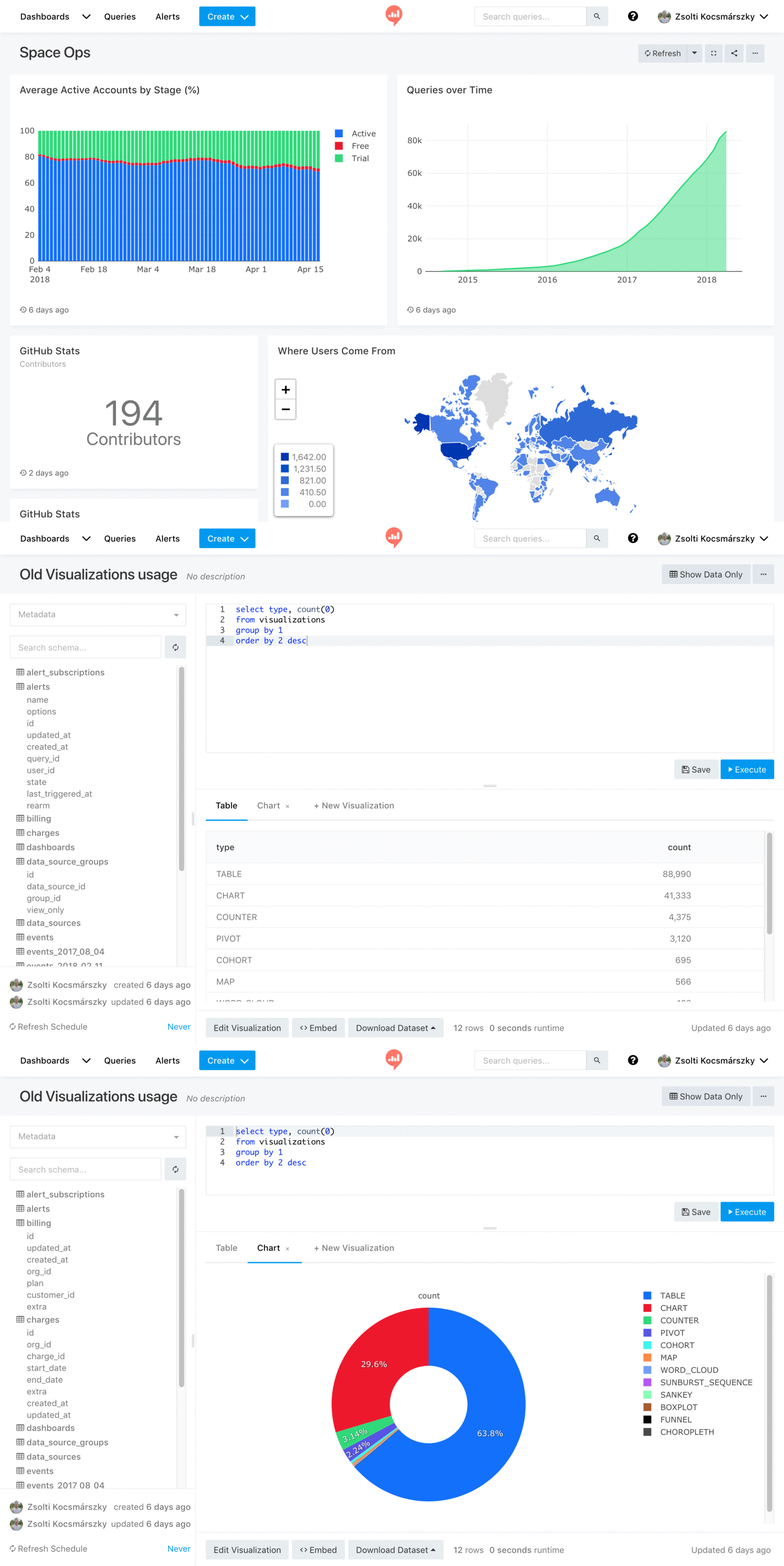
- Query Editor: think of JS Fiddle for SQL queries. It's your way to share data in the organization in an open way, by sharing both the dataset and the query that generated it. This way everyone can peer review not only the resulting dataset but also the process that generated it. Also it's possible to fork it and generate new datasets and reach new insights.
- Visualizations and Dashboards: once you have a dataset, you can create different visualizations out of it, and then combine several visualizations into a single dashboard. Currently Redash supports charts, pivot table, cohorts and more.
Getting Started
- Setting up Redash instance (includes links to ready made AWS/GCE images).
- Documentation.
Supported Data Sources
Redash supports more than 25 data sources.
Getting Help
- Issues: https://github.com/getredash/redash/issues
- Discussion Forum: https://discuss.redash.io/
- Slack: http://slack.redash.io/
Reporting Bugs and Contributing Code
- Want to report a bug or request a feature? Please open an issue.
- Want to help us build Redash? Fork the project, edit in a dev environment, and make a pull request. We need all the help we can get!
Security
Please email security@redash.io to report any security vulnerabilities. We will acknowledge receipt of your vulnerability and strive to send you regular updates about our progress. If you're curious about the status of your disclosure please feel free to email us again. If you want to encrypt your disclosure email, you can use this PGP key.
License
BSD-2-Clause.